

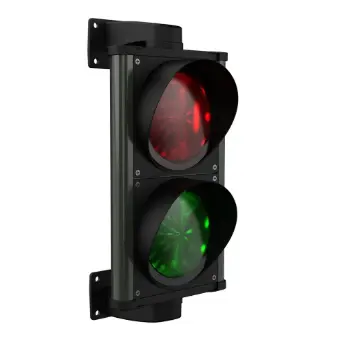
×2
Chronos CHR2LRV traffic lights
One on each side. Runs on 24 V or 230 V with the same code. For tight spaces: ERA80.
ChronosSignalling
Traffic lights, control units and flashing lights for private roads, car parks, industry and logistics.
All signalling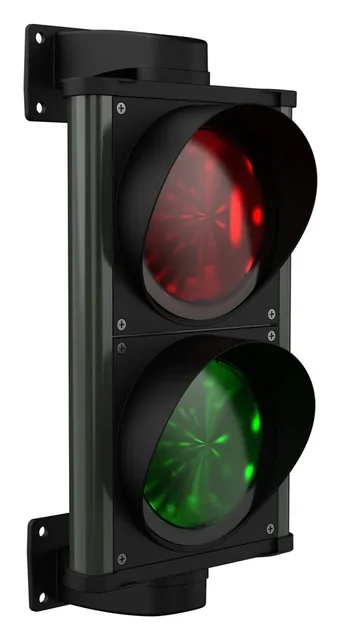 ChronosMulti-voltage 24–230 V, aluminium · IP66
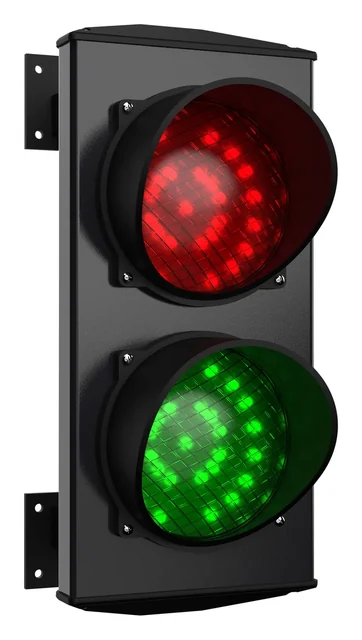 ApolloThe original, in over 60 countries · IP66
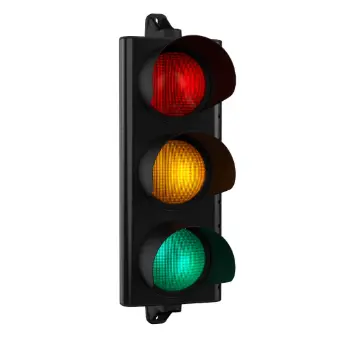 ERA200Road use EN 12368, 200 mm lenses
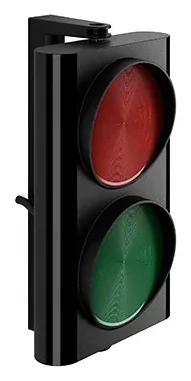 ERA80Compact two-light, 12 or 24 V · IP66
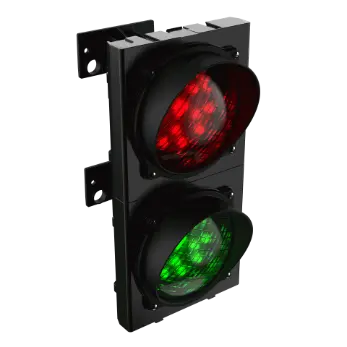 Apollo PlastModular technopolymer · IP66
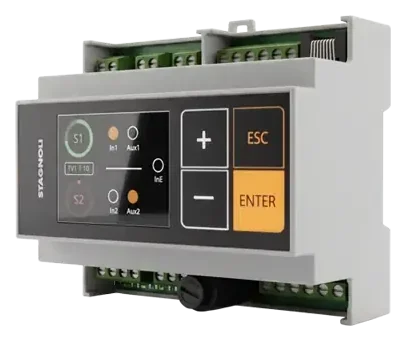 VIACONTROL6-module DIN control unit, 2.2" display
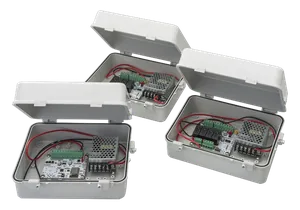 Saturno1 to 10 traffic lights, RS485 master/slave
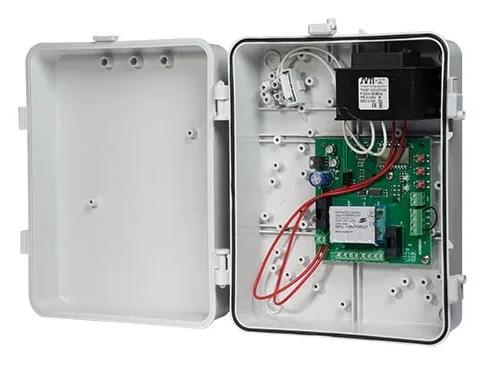 ACNSEM3LBoard for 2 traffic lights, time-based or priority-based
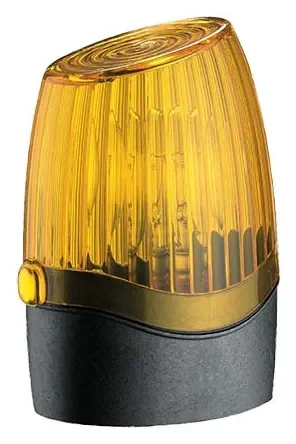 PegasusLED flashing light 12, 24 or 230 Vac/dc
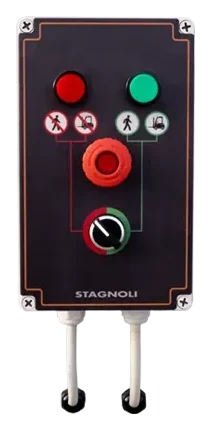 Loading bay accessoriesASFSW230 selector and dock lights
Safety
Photocells, sensors and controls that complete the system: the same construction standards as the Stagnoli range.
All safety productsUse cases
Real scenarios explained in 3D: what to install, where, and how the system behaves.
All use casesUse case · Private roads
One ramp, a single lane, cars going up and down. Two traffic lights and a control unit decide who goes, with no meetings halfway. Send cars, change mode, test the emergency.
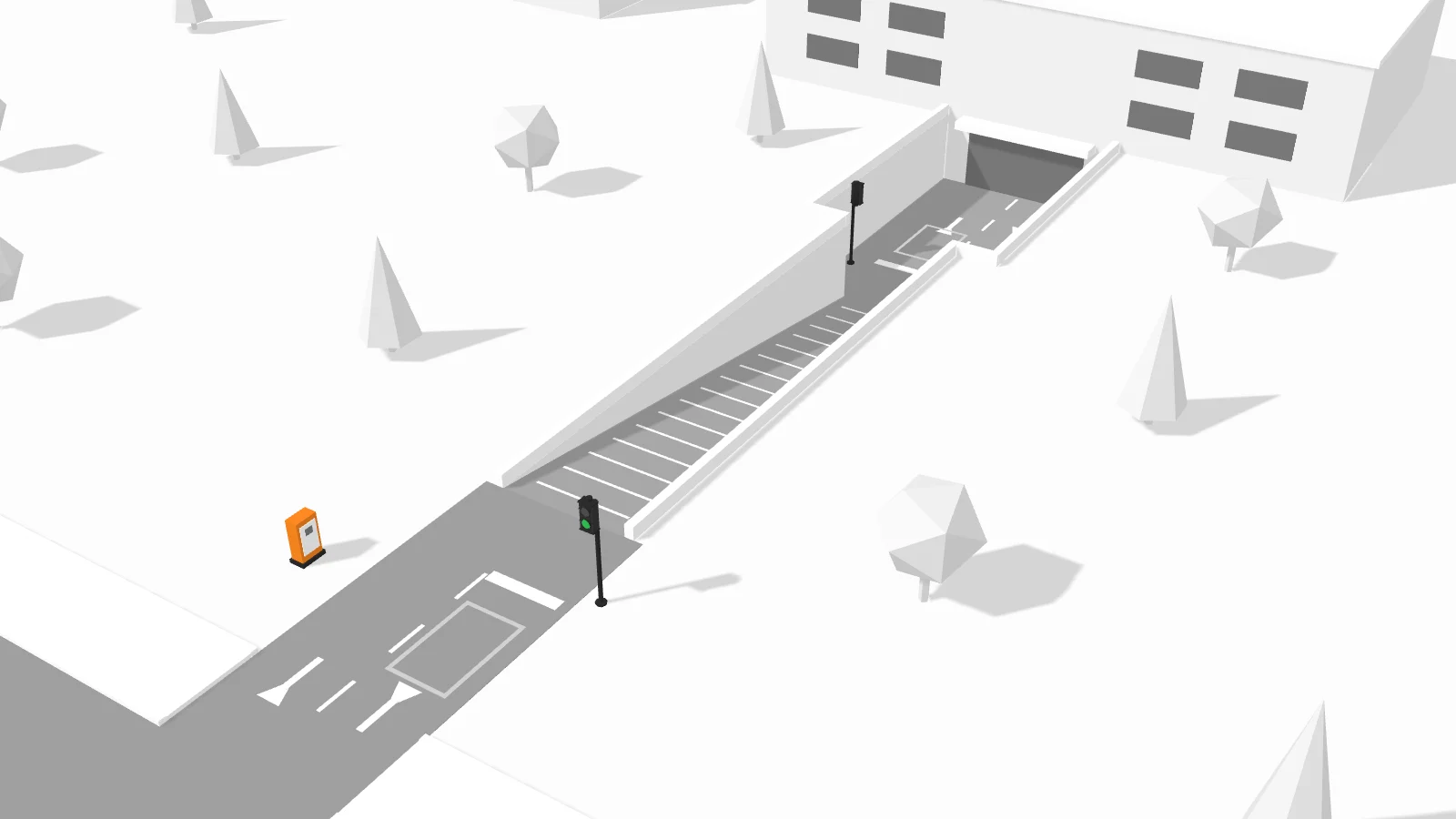
The 3D simulation requires WebGL. Below you'll find how it works, step by step.
3D simulation of the alternating one-way ramp: in Priority mode, with S1 green at rest, loop IN2 calls S2 green after the clearance time.
Drag to rotate · scroll or pinch to zoom
Priority
Control unit
VIACONTROL
RIPOSO
Rest preset (F3)
Rest: S1 green, S2 red
VIACONTROL · 6-module DIN
How it works
On a single-lane ramp the problem isn't who goes first: it's making sure two cars don't end up nose to nose in the middle. The clearance phase, all red while the ramp is occupied, is what prevents it.
| Mode | How green starts | When to use it | Sensors |
|---|---|---|---|
| F1 Priority | At rest the F3 state applies. A car on the loop starts the cycle: TSG clearance (all red), TV green to the requesting side, TSG again, back to rest | Residential exits, garage ramps with irregular traffic | Loops, PRAP or photocells |
| F1 Time | Fixed cycle TV1 → TSG → TV2 → TSG | Industrial driveways, building sites, constant traffic | Not needed |
| F1 Status | Green stays on as long as its input is held | Emergencies, oversized loads, manual control from the gatehouse | Button or contact |
| F3 rest V1 R2 | S1 always green, S2 red until the S2 loop requests passage | Exit onto a public road: street traffic doesn't stop. One loop is enough, on the garage side | 1 loop (input of the traffic light red at rest) |
| F3 rest R1 R2 | Both red; green to the side whose loop detects a car | Residential ramps with similar traffic in both directions | 2 loops |
| IN3 alarm | First the clearance time, then state F4 (default: flashing reds) | Fire protection, evacuation | Alarm contact |
Layout
An alternating one-way system works if there is a two-lane area before and after the narrow section: one for those waiting for green, one for those who have just passed.
The kit
One on each side. Runs on 24 V or 230 V with the same code. For tight spaces: ERA80.
Chronos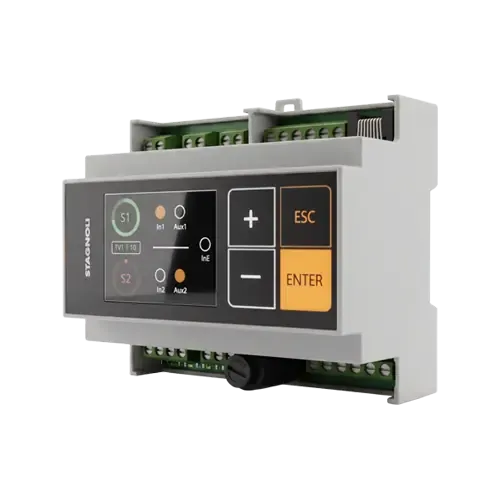
2 traffic lights, 3 modes, 6-module DIN. For systems with several ramps: Saturno, up to 10 traffic lights.
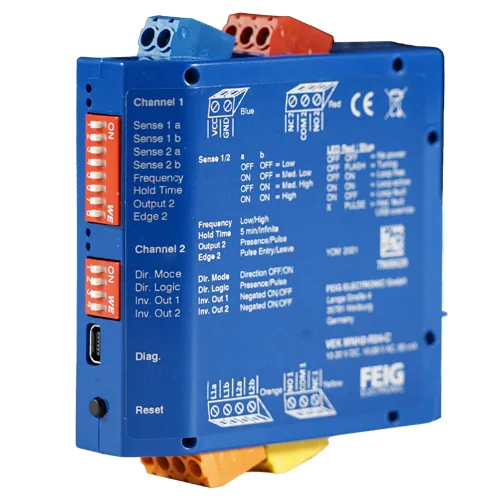
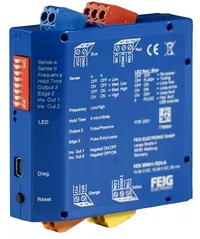
Two channels, one per loop, on DIN rail. Alternatively PRAP sensors.
Sensors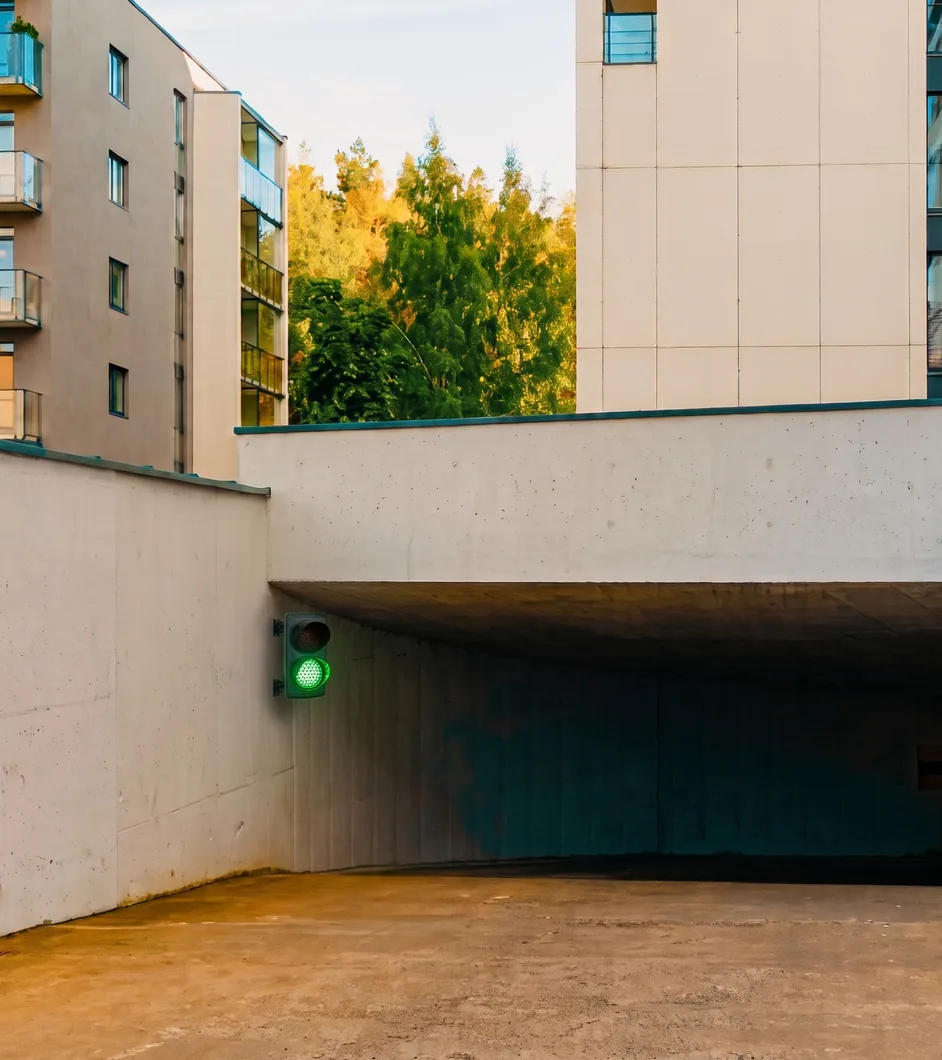
Long 24 V line? Check the cross-section. And how much it costs to keep it on for a year.
Energy impactFrequently asked questions
Only in priority mode, where green starts on request. In time mode the control unit alternates by itself. Instead of loops, PRAP microwave sensors or photocells can be used.
The control unit serves whoever has been waiting longest first, then the other side. Between the two greens there is always the clearance phase, with both lights red.
For a ramp with two traffic lights, VIACONTROL or ACNSEM3L. For multi-storey garages with several ramps and space counting, Saturno, which manages up to 10 traffic lights with master/slave boards connected via RS485.
Yes, Chronos runs on 24 V ac/dc. If the ramp is long, check the voltage drop with the calculator, or use a 230 V supply.
Send us the ramp length, type of access and available power supply: we'll propose traffic lights, control unit and sensors.
Choose which cookies and similar tools to accept. Necessary ones are always active. You can change your mind at any time from “Cookie preferences” at the bottom of every page.
Needed for the website to work: session, language and storing your choice. Details
Google Analytics 4: tells us in aggregate form which pages are visited, to improve the website. Details
Google Ads and the website's campaign cookies: they measure which ads and campaigns bring requests and link them to your request. Details
YouTube videos and the Google Maps map, loaded from Google servers. Details