
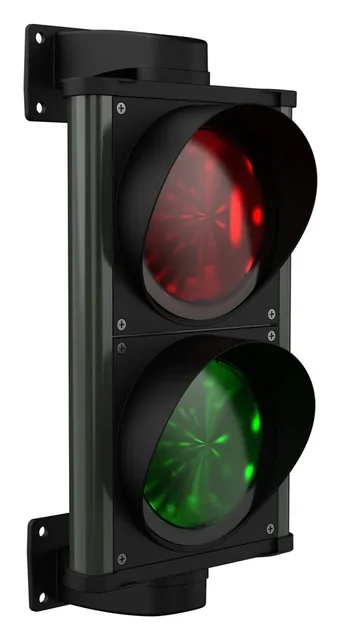
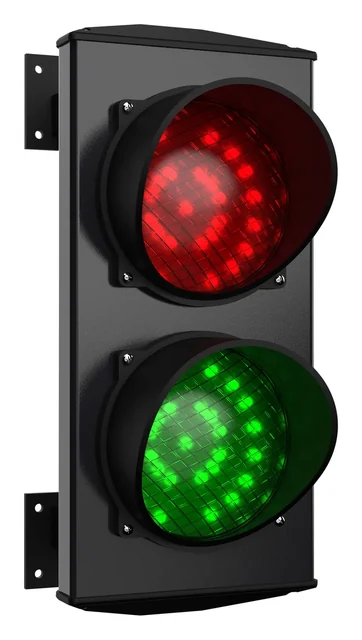
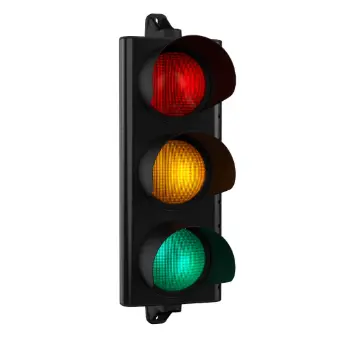
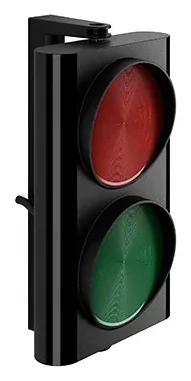
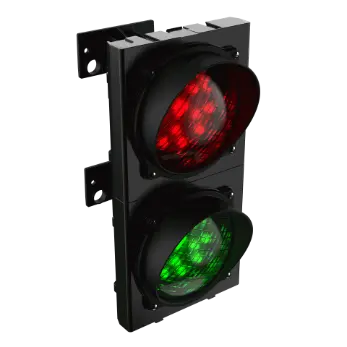

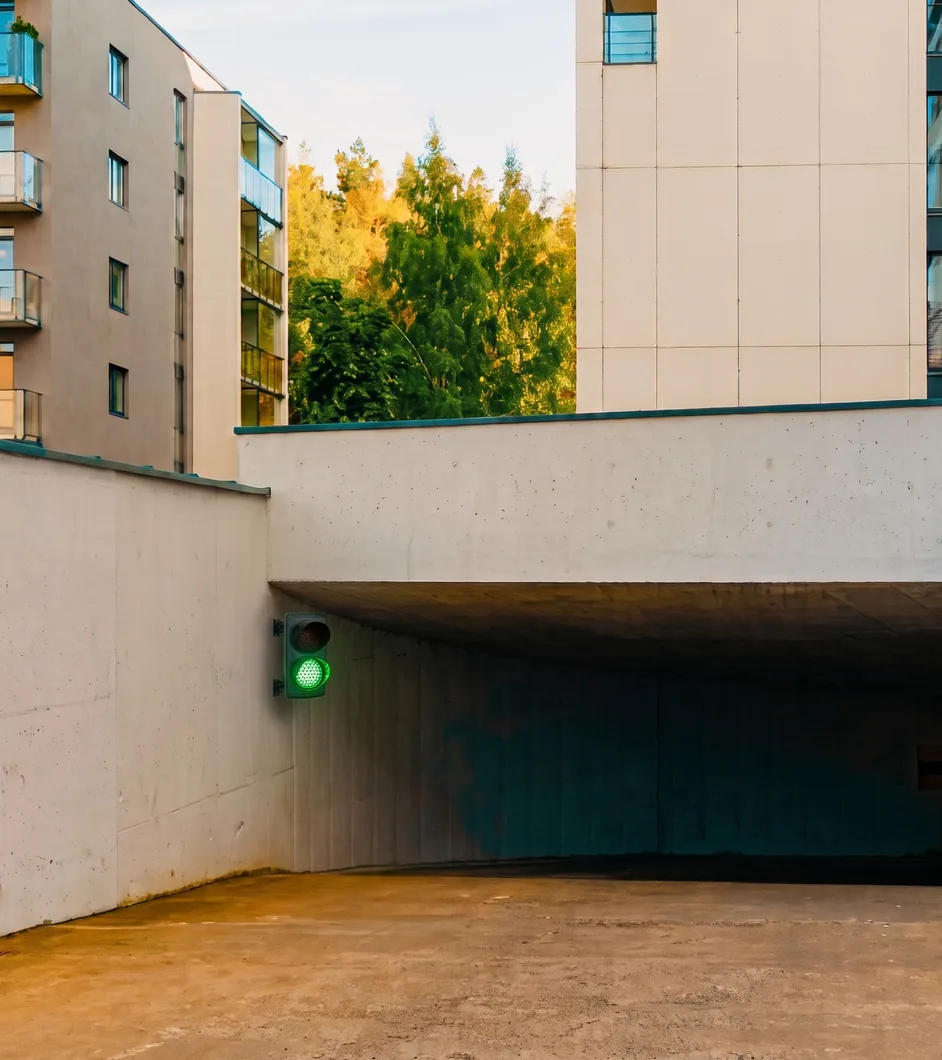
On a long line, especially at 24 V, the voltage reaching the traffic light can be much lower than at the source. Enter the system data and find out whether the cable cross-section is enough.
- Current
- —
- Voltage at the load
- —
- Minimum recommended cross-section
- —
- Max length with this cross-section
- —
The formula
For a direct current or single-phase line, the current runs along the cable out and back, so the length counts twice:
In three-phase the factor 2 becomes √3 and the current is calculated on 400 V. L is the length in metres, S the cross-section in mm², ρ the resistivity of copper.
Why 24 V is critical
For the same power, at 24 V the current is almost ten times that at 230 V, and the drop rises in the same proportion. One volt lost at 230 V is 0.4%; at 24 V it is more than 4%. That is why on long lines it pays to:
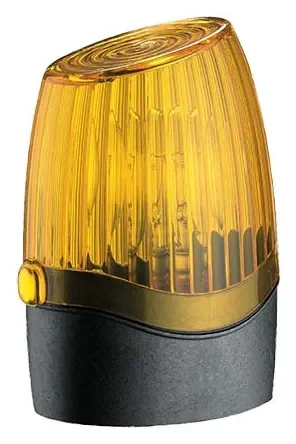
- bring 230 V close to the traffic lights and use 230 V or multi-voltage lights such as Chronos;
- or increase the cross-section of the conductors;
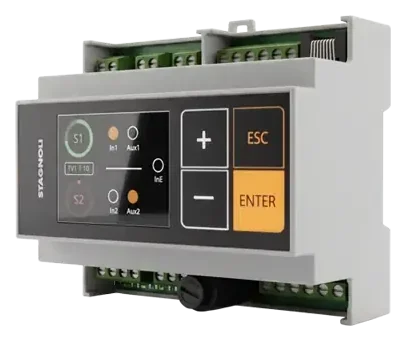
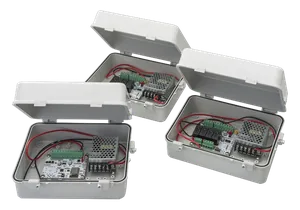
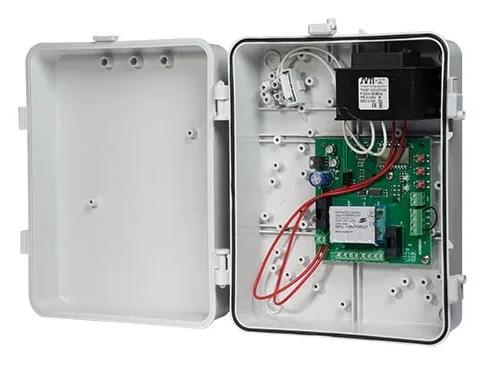
- with several distant lights, use a control unit with serial communication such as Saturno, which powers each slave locally.
Limits of the calculation
It is a first-check tool and does not replace the design of the electrical system to CEI 64-8 (IEC 60364). It does not consider cable reactance, inrush currents or the actual installation temperature.