
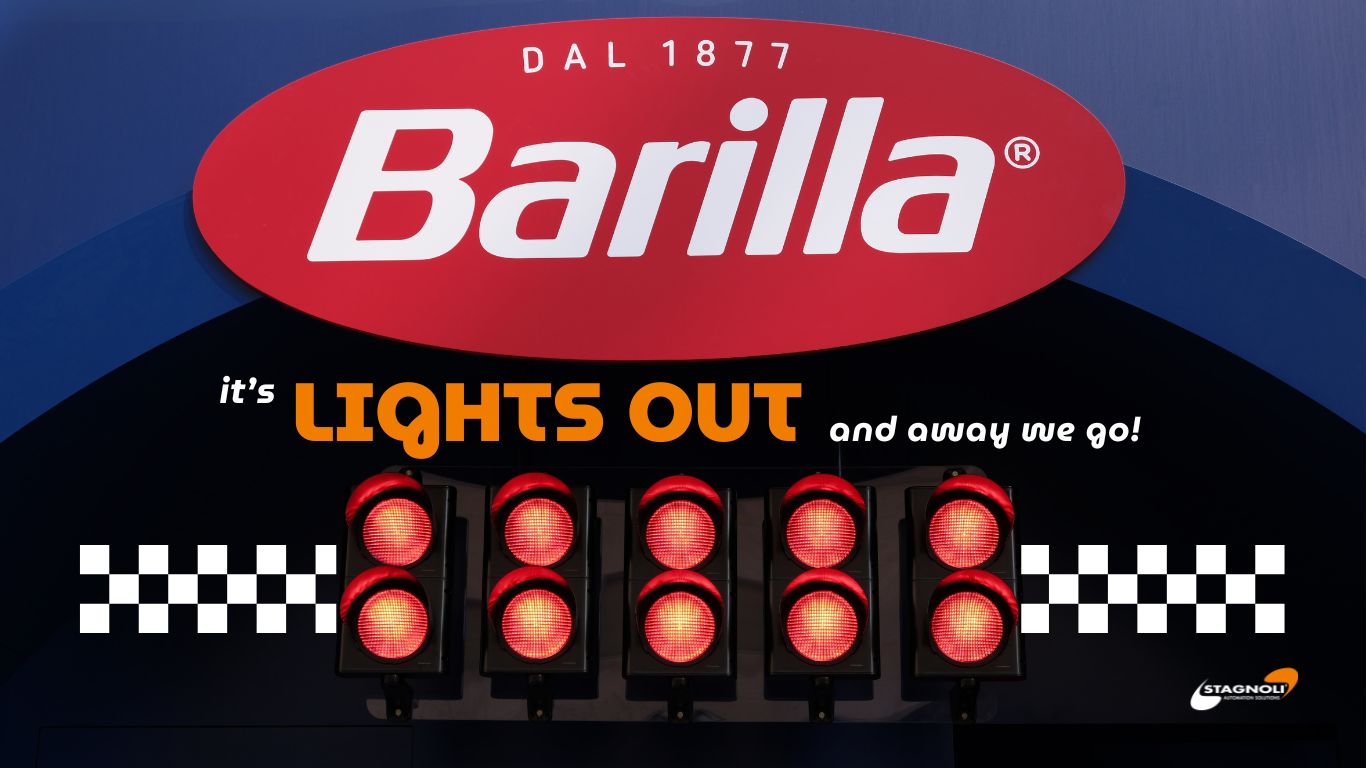
During the weekend of the Italian Formula 1 Grand Prix, Piazza San Babila transformed into the beating heart of “Domenica Italiana,” an initiative by Barilla organized in collaboration with 2night to celebrate the passion for motors, conviviality, and Italian taste.
At the center of the setup was a large table designed in the shape of the Monza track, where the public could taste the Barilla Racing Edition Gran Ruote, follow the live race broadcasts, and experience show cooking and themed activities for the duration of the event.
To further engage the spectators queuing outside the pavilion, the organizers decided to place a traffic light at the entrance, much like the one on the starting grid of an F1 Grand Prix: the sequence of red lights that turn on one after another and then turn off all together, signaling the start of the race. In the same way, that traffic light had to signal the start of each access shift to the pavilion, transforming the moment of entry into a small, scheduled “start” and making it visible to everyone, even those still in line, when the next shift was about to begin.
We were therefore contacted to provide a Stagnoli traffic light system for events capable of faithfully replicating that visual logic, transforming the wait into a moment of shared entertainment.
The request
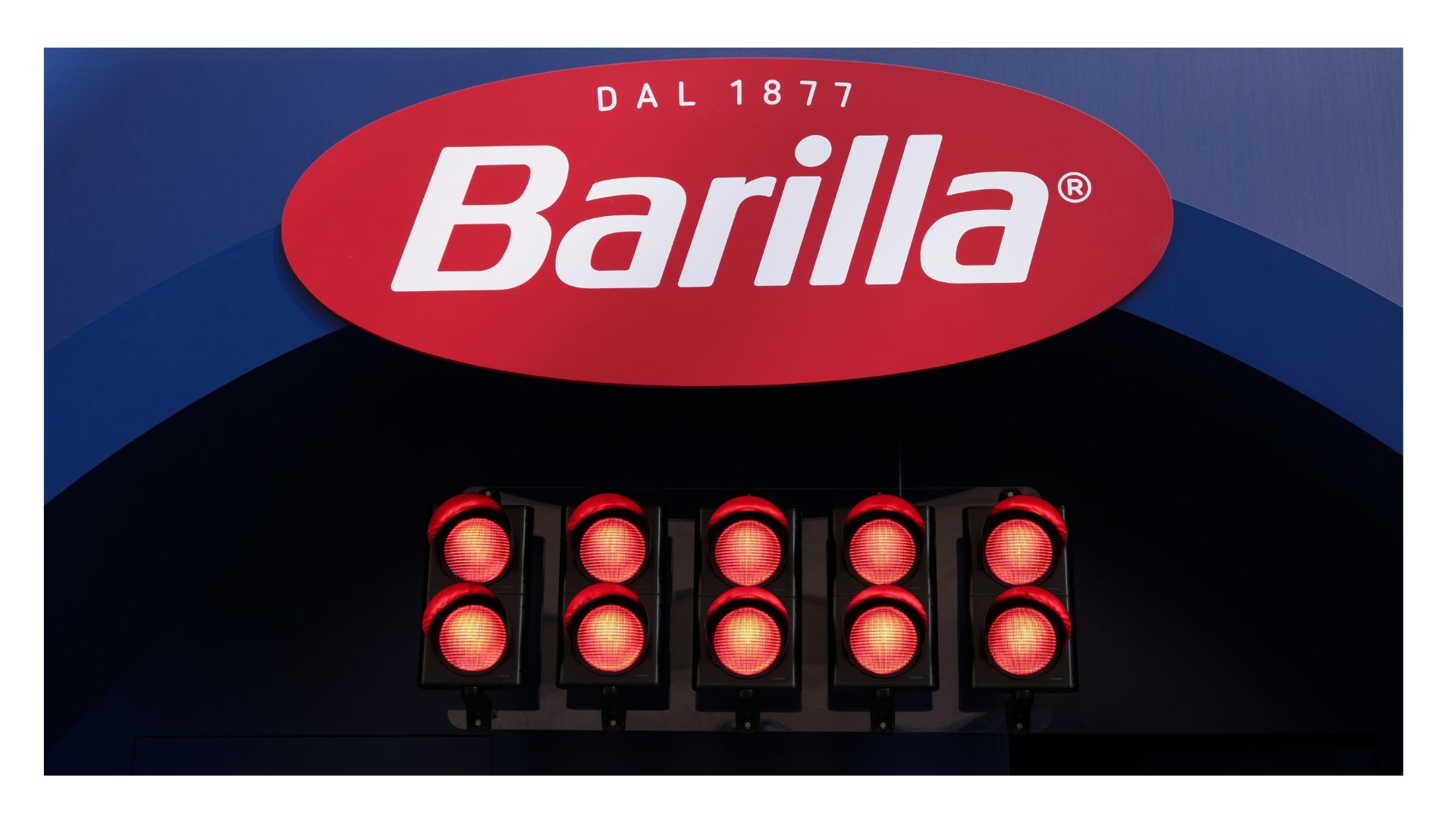
The technical brief was precise and entirely inspired by the start of a Formula 1 race. The format included five traffic lights arranged in sequence in front of the pavilion entrance. Every five minutes, one had to turn on, until the row of five illuminated signals was completed. At the thirtieth minute, all five traffic lights had to turn off at the exact same instant, replicating the precise moment when the lights go out in F1 and the race begins.
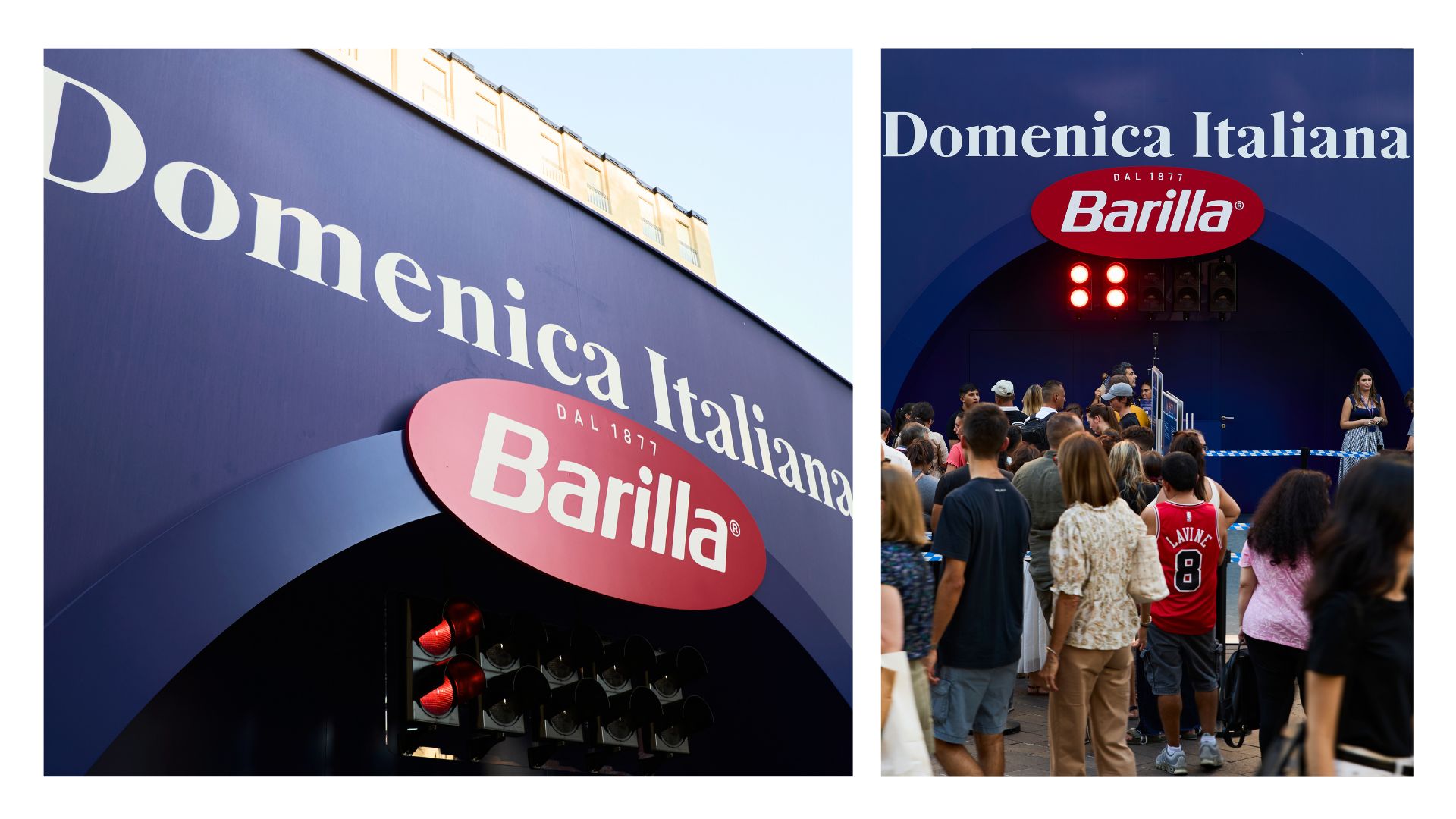
This visual signal had a precise function: to communicate to the spectators queuing outside the pavilion that the activity inside was about to start, generating the same thrill of anticipation that precedes the start of a Grand Prix. A scenographic detail capable of telling the story of the event even before the public crossed its threshold.
The technical solution
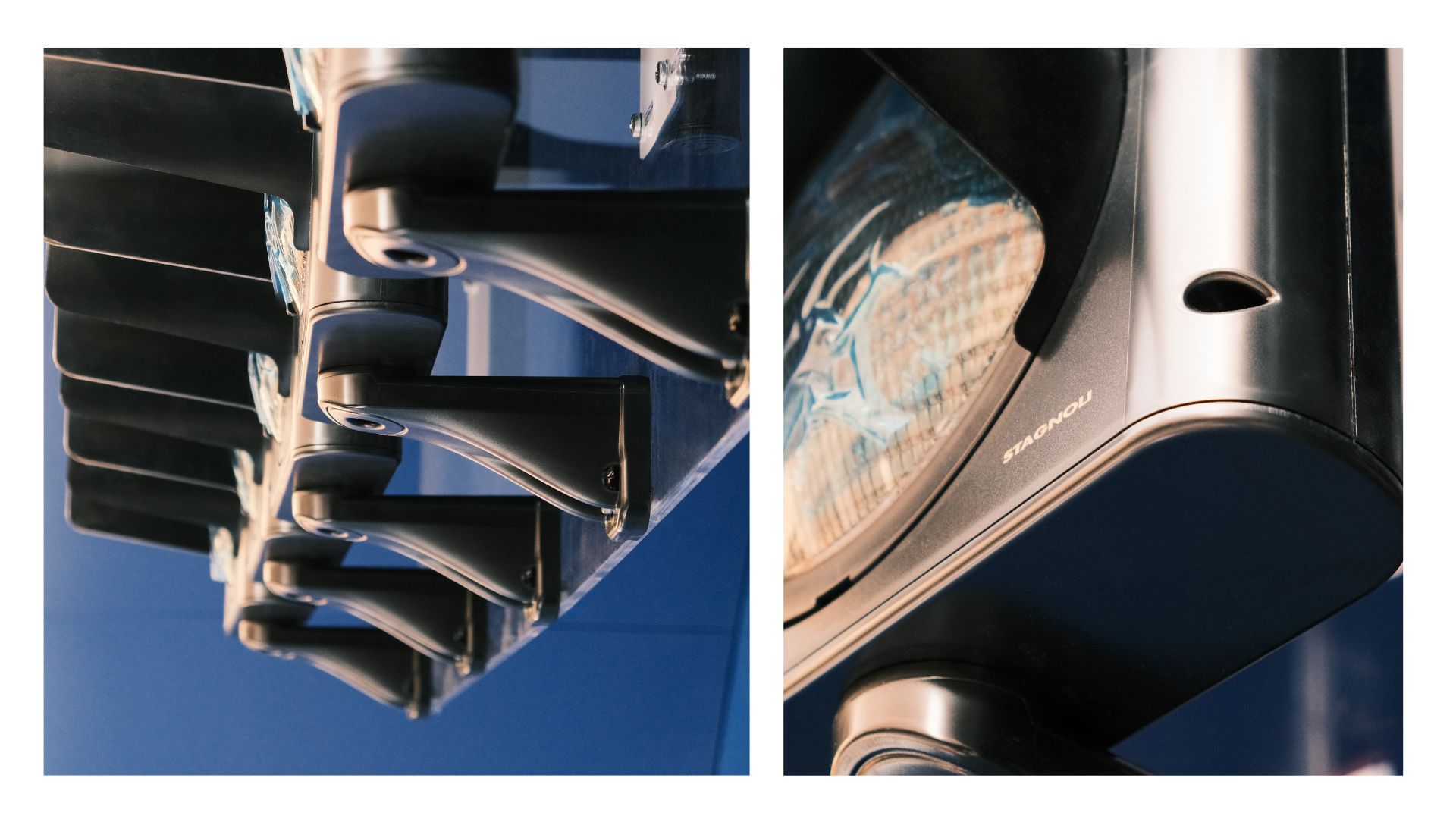
To respond to this request, we prepared five ERA200 two-red-light traffic signals, the most immediate configuration for visually replicating the starting lights of a race.
This type of two-light traffic signals provides a simple and highly visible solution when a clear light indication is required, making it particularly suitable for temporary installations and special events.
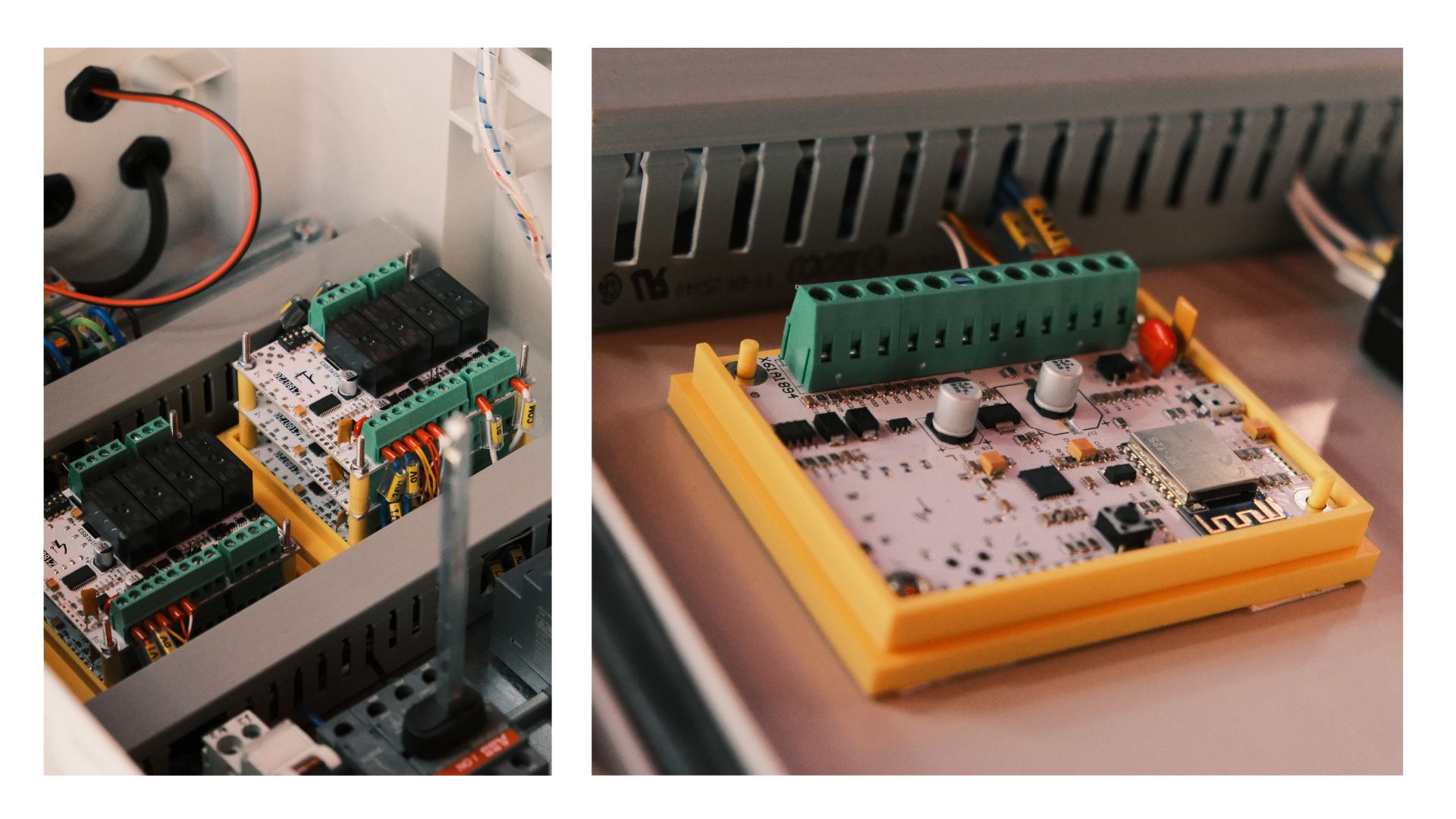
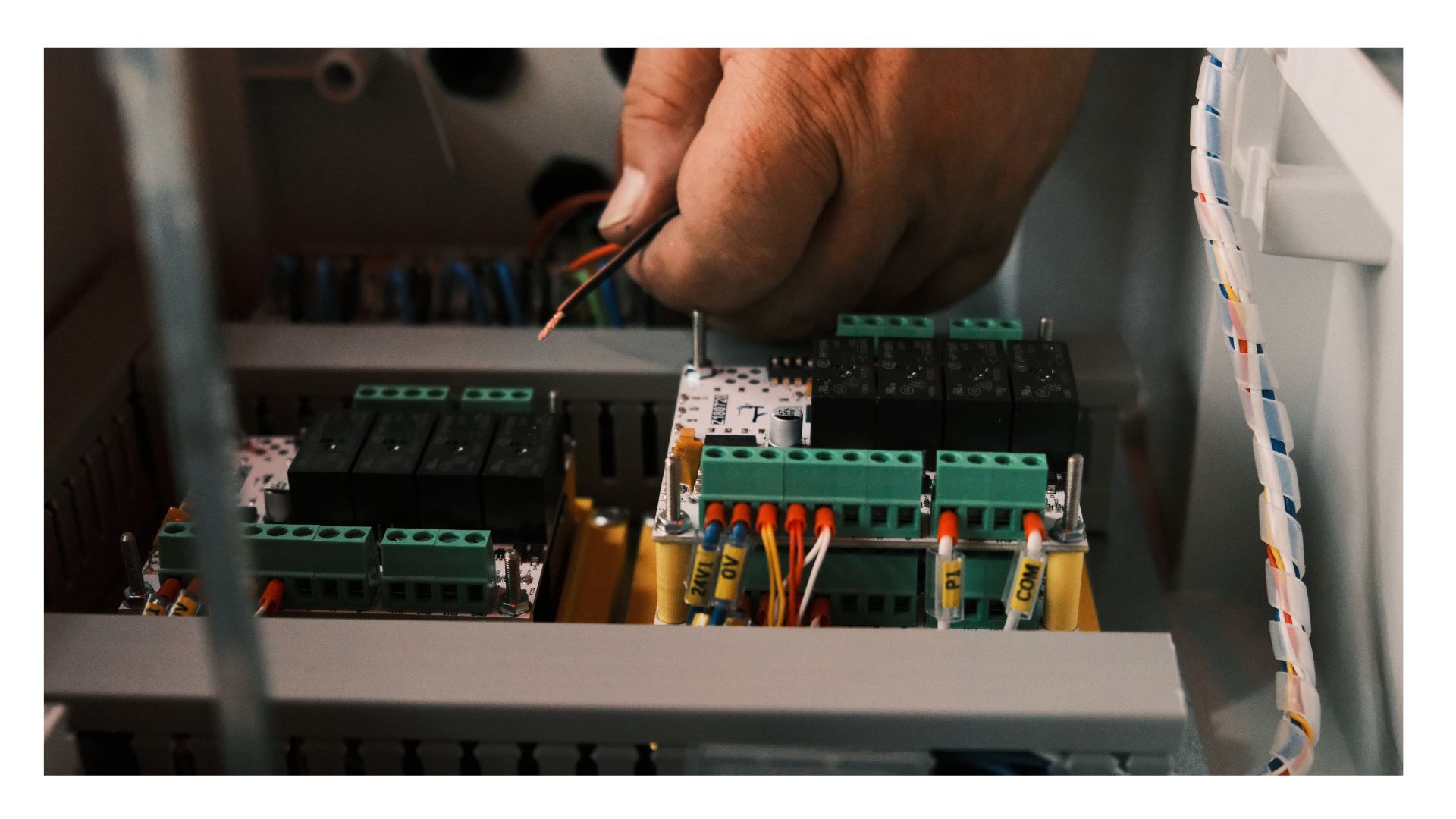
The coordination of the entire sequence was entrusted to a SATURNO control unit, the Stagnoli traffic light control system designed to synchronously manage up to 10 traffic light points.
The control unit works according to a master/slave architecture: a master board governs the overall temporal logic, the activation times, the sequence, and the moment of simultaneous shutdown, while five slave boards, one dedicated to each traffic light, handle the direct control of the lights at their respective points. This distributed structure allows the system to be scaled by adding or removing light points without having to redesign the control logic, and ensures that each traffic light remains perfectly synchronized with the others, an essential requirement when the scenic effect depends on simultaneous millisecond-level shutdown.
A central aspect of the project was thinking about the installation from the perspective of those who would physically mount it on site. A temporary event in a city square leaves narrow time margins and requires solutions that minimize operational complexity on site.
For this reason, the master control unit, the five slave boards, and all the control connections were integrated into a single custom panel, wired and tested before delivery. The installer on site only had to position the five ERA200 traffic lights and connect them to the panel, without having to intervene on the programming logic or the wiring of the control unit, drastically reducing assembly times and the margin of error during setup.
The result was an effect that was simple in its execution but of great scenic impact, made possible by a reliable traffic light control system and an installation designed to be fast and smooth even in a temporary context such as a city event.
The result
The luminous countdown accompanied the public’s wait, transforming it into part of the show. Every activation, occurring at five-minute intervals, heightened the anticipation of those in line, until the moment when, at the thirtieth minute, all five lights went out together, officially kicking off the Barilla experience in Piazza San Babila.
This project demonstrates how a Stagnoli traffic light system for events can step outside its usual context to become a tool for scenography, communication, and timing in high-impact visual events. From two-light traffic signals to more complex synchronized configurations, Stagnoli solutions provide the same reliability and intelligent control logic off the road as well.
Do you want to discover our full range of products?